







May 6, 2026
Private Airport Transfers for Corporate Groups in Europe: A Planner's Guide
Private airport transfers for corporate groups in Europe: orchestrating multi-flight arrivals at CDG, Munich, Schiphol, and major hubs.
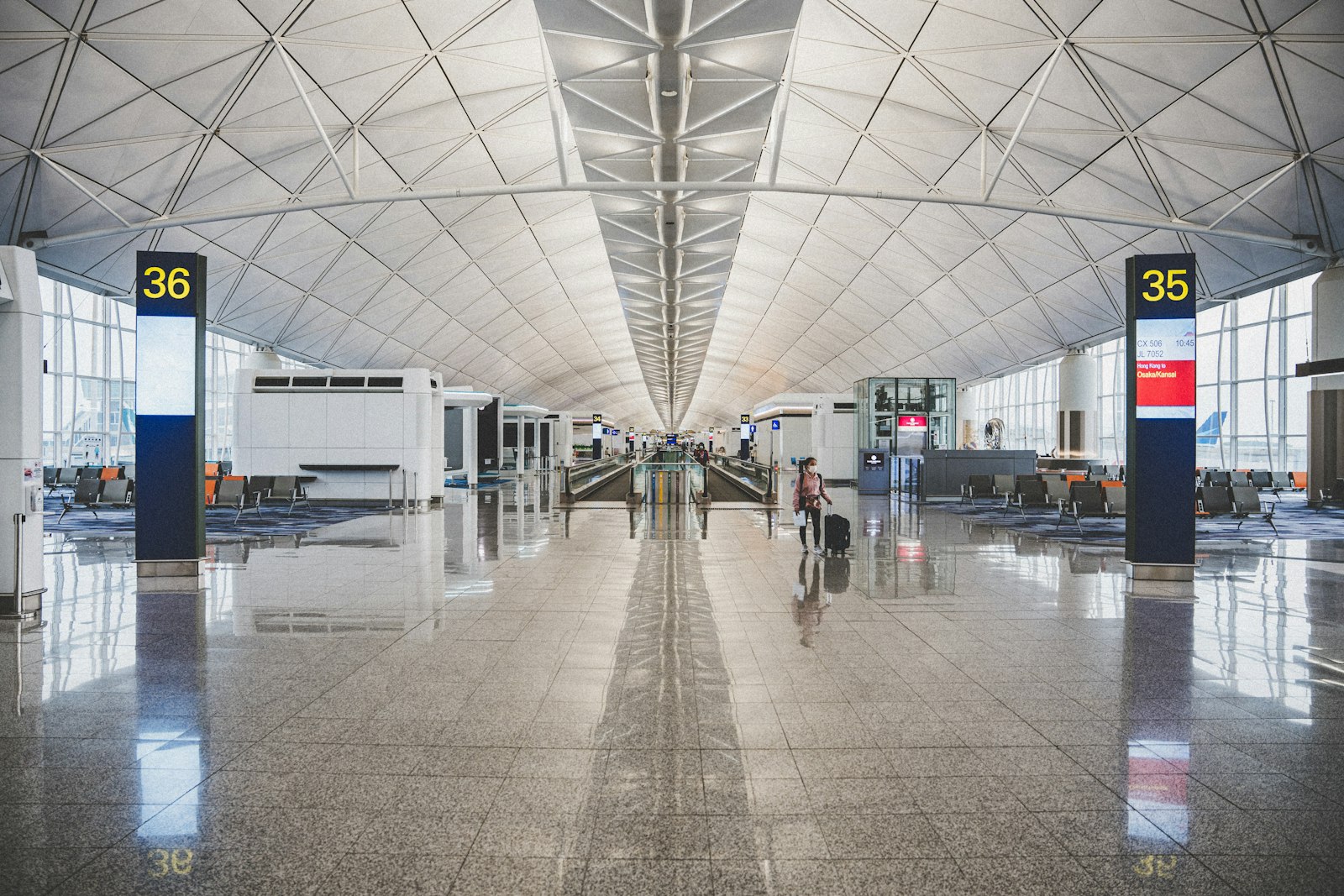
Sixty executives are landing on seven different flights at Charles de Gaulle within a three-hour window, all expected at the same Paris hotel for a welcome dinner. One flight arrives early. Two are 40 minutes late. Three land at separate terminals. A senior speaker’s bag is delayed at baggage claim. The hotel concierge expects everyone to be checked in before 18:30.
What looks on paper like a simple “airport pickup” is actually one of the more complex pieces of logistics in any corporate event. The successful private airport transfer for corporate groups in Europe is built on flight monitoring, parking permits, meet-and-greet protocols, terminal-specific access rules, wait time policies, and driver-to-passenger matching that has to hold up when half a dozen things go wrong at once.
This guide breaks down how senior MICE planners build airport transfer programs that survive the moment seven flights collide with one schedule, at every major European hub.
Why airport transfers are the highest-stakes touchpoint
The airport is the moment the attendee experience starts. A confused arrival, a missing driver, or a slow connection sets the tone for the entire event in a way that no excellent dinner can fully reverse. Planners who think of the airport as the first chapter of the program, not as a logistics afterthought, consistently deliver better events.
The stakes are also operational. An airport transfer is the only event touchpoint that mixes elements outside your control (flight schedules, immigration queues, baggage delays) with elements that demand precision (vehicle pickup windows, driver positioning, route timing). Getting it right requires the highest level of preparation of any element in the event plan.
Designing the arrival flow
The arrival flow is the document that maps every flight to a vehicle, every passenger to a driver, and every contingency to a protocol. It is built in three layers: the flight-to-vehicle assignment, the pickup format, and the live monitoring system.
Mapping flights to vehicles
Start from the final attendee manifest with flight numbers and arrival times. Group passengers by arrival window. A 30-minute window means passengers arriving within 30 minutes of each other can share the same vehicle, with the driver waiting for the latest scheduled arrival in that window. Wider windows fill the coach more efficiently but make individual passengers wait longer. Tighter windows improve passenger experience but require more vehicles.
A common pattern works well for groups of 30 to 100: deploy two or three coaches in rolling 45-minute windows for the main arrival block, with one or two minivans on standby for individual VIPs and late-running flights. Senior executives nearly always rate the dedicated minivan with name-board greeter more highly than the shared coach, even when the wait is the same.
Meet-and-greet vs curbside pickup
Two pickup formats dominate European corporate transfers. Curbside pickup positions the vehicle at the designated coach bay outside the terminal and asks passengers to find it themselves. It works for cost-sensitive groups familiar with the airport. The downside: confused passengers, missed handoffs, and a higher rate of attendees jumping into the wrong vehicle.
Meet-and-greet places a driver or greeter inside the arrivals hall holding a name board, walking the passenger to the vehicle. It costs €30 to €80 more per transfer, depending on the airport, but it eliminates almost every type of confusion. For executive-level corporate transfers, meet-and-greet pays for itself in reduced incident rate.
Flight monitoring and dynamic adjustment
Modern coach operators integrate live flight tracking into their dispatch systems. Drivers receive automatic schedule adjustments when flights are delayed or rerouted. The planner sees the same data on a shared dashboard. A delayed flight that would have caused a missed pickup window now triggers an automatic 30-minute hold and a notification to the dispatcher.
Ask your provider whether their dispatch system pulls flight data in real time. If the answer is “we check manually”, the system will fail somewhere on a multi-flight day. Real-time integration is now standard at the top of the European market and should be a baseline expectation for any private airport transfer for corporate groups.
Common pitfalls (and how to avoid them)
Three operational issues recur on corporate airport transfers: wait time policies that quietly inflate the invoice, terminal-specific access rules that surprise inexperienced providers, and unmonitored handoffs that lose passengers in transit.
Wait time policies that hurt the budget
Most European operators include 30 to 60 minutes of free waiting after the scheduled flight arrival. After that, waiting time bills at €40 to €80 per hour for a coach. For a 60-person event where two flights run 90 minutes late, unmonitored waiting can add €500 to €800 to the invoice you receive a week later.
Lock the policy in writing before the event: free waiting window length, hourly rate after that, who authorises extended waiting, and what happens when a flight is delayed by more than the included window. A 10-minute conversation at quote stage avoids a tense email exchange after the event.
Terminal-specific access restrictions
Major European airports have specific rules about where coaches can pick up passengers, when, and for how long. Charles de Gaulle restricts coach access to Terminal 2E and 2F to designated parking bays with a maximum 20-minute drop-off window. Munich has different rules for coaches above 8 tonnes. London Heathrow requires pre-registration for some coach pickup areas. Stockholm Arlanda has dedicated coach zones at Terminal 5 with specific timing windows.
A provider unfamiliar with these rules will either incur fines that get passed back to you, or worse, will be unable to pick up passengers as scheduled. Insist on confirmation that the provider has operated at your specific airport in the past 12 months, with named contacts at the airport’s coach desk.
Major European airports — local logistics specifics
Each major European hub has its own operational quirks. The planners who run smooth corporate transfers build a per-airport playbook over time and brief the provider against it.
Paris CDG and Orly
Charles de Gaulle is large, decentralised across three terminals (1, 2, and 3), and slower to navigate than first-time visitors expect. Plan 45 minutes from gate to pickup point for international arrivals. Orly is smaller but has its own ZFE compliance and approach traffic constraints during peak hours.
Both airports impose Crit’Air sticker requirements on coaches entering Paris proper. Confirm that every vehicle assigned to your transfers carries the right sticker for the relevant ZFE zones in 2026.
Munich and Frankfurt
Munich Airport is well-organised and predictable. Coach pickup zones are clearly signposted, and access is straightforward. Frankfurt is the busiest hub in continental Europe; expect longer queues at customs and tighter pickup time windows. Both airports work well with local German operators who understand the regional driver hour rules.
Amsterdam Schiphol
Schiphol is one of the easier European hubs for corporate transfers. The Plaza terminal layout consolidates arrivals, and the coach pickup zones are conveniently positioned. Watch for the early-morning departure peak (07:00 to 09:00) when traffic into the airport from central Amsterdam can add 30 minutes to the schedule.
Stockholm Arlanda
Arlanda has dedicated coach zones at Terminal 5 with specific access rules. The 40-minute drive into central Stockholm can stretch significantly in winter weather. Build seasonal buffer into the schedule between November and March, and confirm the provider’s snow tyre and winter operating protocol.
Departure transfers — different rules apply
Departure transfers run on different logic than arrivals. You control the departure time from the hotel; you do not control flight check-in pace or security queue length at the airport. Build the departure schedule against the earliest scheduled flight, with sufficient buffer to clear security at peak hours.
For groups departing on multiple flights spaced 90 minutes or more apart, deploy multiple smaller vehicles in waves rather than holding everyone in one coach for the earliest departure. The cost difference is rarely significant, and the passenger experience is materially better. When you’re scoping a similar event, BusCom’s planners can build the full multi-flight departure schedule with passenger-by-passenger vehicle assignment — reach us at contact@buscom.info.
How BusCom orchestrates multi-flight arrivals
For corporate airport transfers, BusCom assigns a dedicated operations contact who builds the per-flight-per-vehicle plan with the planner two weeks before the event. Drivers receive a printed manifest with each passenger name, flight number, and contact mobile. The dispatch system tracks every flight in real time, and the planner has live visibility on each vehicle status via a shared channel.
With 20,000+ customers served, a 4.6 out of 5 Trustpilot rating, same-day quotes, GDPR-compliant data handling for attendee manifests, and operating bases in Paris, Munich, Amsterdam, and Stockholm, BusCom runs corporate airport transfers as a structured operations programme rather than an ad hoc dispatch exercise.
A successful private airport transfer for corporate groups in Europe is built on three principles: map every flight to a vehicle before the day, choose meet-and-greet over curbside whenever the audience warrants it, and pick a provider whose dispatch system runs on real-time data rather than manual phone calls. Get those three right, and the seven-flight Friday afternoon at CDG becomes a routine operation rather than an event-day fire drill.
Send your group brief to contact@buscom.info or call +33 1 84 80 99 65 to plan your next corporate airport transfer programme with a provider that operates against this exact framework.