







April 22, 2026
Wedding Guest Transportation in Europe: Minibus, Coach or Chauffeur?
Wedding guest transportation in Europe: pick coach, minibus, or chauffeur for destination weddings, ceremony-to-reception transfers, and late returns.
A Provence ceremony with 80 guests arriving from 12 different countries. A reception 25 kilometres away in a 14th-century estate. The bride’s only request: “nobody waits, nobody drives drunk, nobody gets lost.” A 2 a.m. return back to hotels scattered across three villages. The dress code requires that nobody arrives looking less than dignified.
Wedding guest transportation in Europe is unlike any other event logistics. The emotional stakes run high, the arrival times fragment across half a dozen flights and trains, the late-night return is delicate, the attire constrains the vehicle choice, and there is zero tolerance for an awkward moment in front of the couple’s families. The right fleet mix turns transport into a quietly perfect part of the day. The wrong one turns it into the topic everyone discusses at brunch.
This guide helps wedding planners and couples pick the right combination of coach, minibus, and chauffeur for European destination weddings, ceremony-to-reception transfers, late-night returns, and the operational details that separate elegant transport from awkward transport.
Why wedding transport is uniquely demanding
A corporate event treats transport as a logistics line item. A wedding treats it as part of the guest experience, on the same level as catering and music. The same vehicle for the same group can either elevate the day or undermine it depending on the cleanliness of the cabin, the warmth of the driver greeting, and the timing precision of the schedule.
Wedding transport also runs on a unique timeline. Arrivals span 12 to 48 hours before the ceremony. The wedding day itself involves three to five distinct movements. Late-night returns happen with guests in evening wear, often after several drinks, and the vehicle becomes the buffer between the celebration and the hotel bed. Most providers underestimate how many touchpoints a single wedding actually contains, which is how 60-guest weddings end up needing six separate transport movements over 36 hours.
Mapping the transport needs of a wedding day
Build the transport plan around three core touchpoints: guest arrivals from airports and hotels, the ceremony-to-reception transfer (the most visible movement of the day), and the late-night returns. Each has different vehicle requirements.
Guest arrival from airports and hotels
For destination weddings, guests typically arrive over a 24- to 48-hour window before the ceremony. Family and bridal-party members come earlier; out-of-country friends arrive the day of the ceremony or the night before. Organising airport transfers cleanly means matching arrival windows to vehicle sizes, with meet-and-greet for elderly relatives and international guests, and structured shared pickups for groups landing within the same hour.
A common pattern: one shared minibus or midicoach running rolling pickup windows at the nearest airport for arrivals between 14:00 and 20:00 on the day before the wedding, plus individual chauffeured cars for grandparents, the bride’s immediate family, and any guests with mobility needs. This combination keeps the budget reasonable while protecting the high-touch transfers for the people who need them.
Ceremony to reception transfer
This is the visible centrepiece of wedding guest transportation in Europe. The whole guest list moves from ceremony venue to reception venue, usually within a 30- to 60-minute window after the formal exit. The vehicles arrive at a specific time, guests board with cocktails in hand or just after, and the convoy delivers them to the reception in time for the welcome drinks.
The timing is unforgiving. A coach that arrives 20 minutes late delays the reception entrance and compresses the dinner schedule. Provide your transport supplier with the exact ceremony-end time, the photo-session window, and the reception’s drinks reception start time. A buffer of 15 to 20 minutes between ceremony exit and vehicle boarding works well for most weddings.
Late-night returns
The 1 a.m. return is where wedding transport quietly succeeds or fails. Guests are tired, dressed up, and often less coherent than they were at 18:00. Vehicles should be clean, lit, and warm. Drivers should greet without judgment and wait without rushing. The convoy should run in scheduled waves so that guests who want to leave at 23:30 do not have to wait until the last bus at 02:00.
A common pattern: three departure waves at 23:00, 00:30, and 02:00, with at least one minivan available on standby for the long-tail late departures. The cost of an extra hour of standby vehicle is trivial compared to the goodwill it generates with the bride’s family.
Vehicle options compared
The fleet mix depends on the wedding size, the venue layout, and the guest profile. Most weddings end up using two or three vehicle categories rather than one.
Coach for large guest blocks
A 49- or 50-seat coach moves the largest portion of the guest list in one vehicle, which simplifies the ceremony-to-reception convoy enormously. For weddings of 60 or more guests, this is almost always the right backbone of the fleet. The coach handles the main movement, while smaller vehicles cover the family members and the late-night long-tail.
Confirm that the coach can access both venues. Many beautiful European wedding venues (Tuscan villas, French châteaux, Spanish farmhouses) have narrow driveways that exclude 12-metre coaches. A site visit by the provider before the wedding is non-negotiable.
Minibus shuttles for hotel-to-venue
For weddings where guests stay at 3 to 5 different hotels in the surrounding area, multiple minibuses running rotating shuttles between hotels and the ceremony venue cover the morning movement cleanly. A 16- or 19-seat minibus has the access advantage over a full coach and can navigate village roads, hotel forecourts, and private estate driveways that a 50-seater simply cannot.
This is also the right vehicle for the rehearsal dinner the night before, the post-wedding brunch the morning after, and any auxiliary movements during a 3- or 4-day wedding weekend.
Chauffeur car for the couple
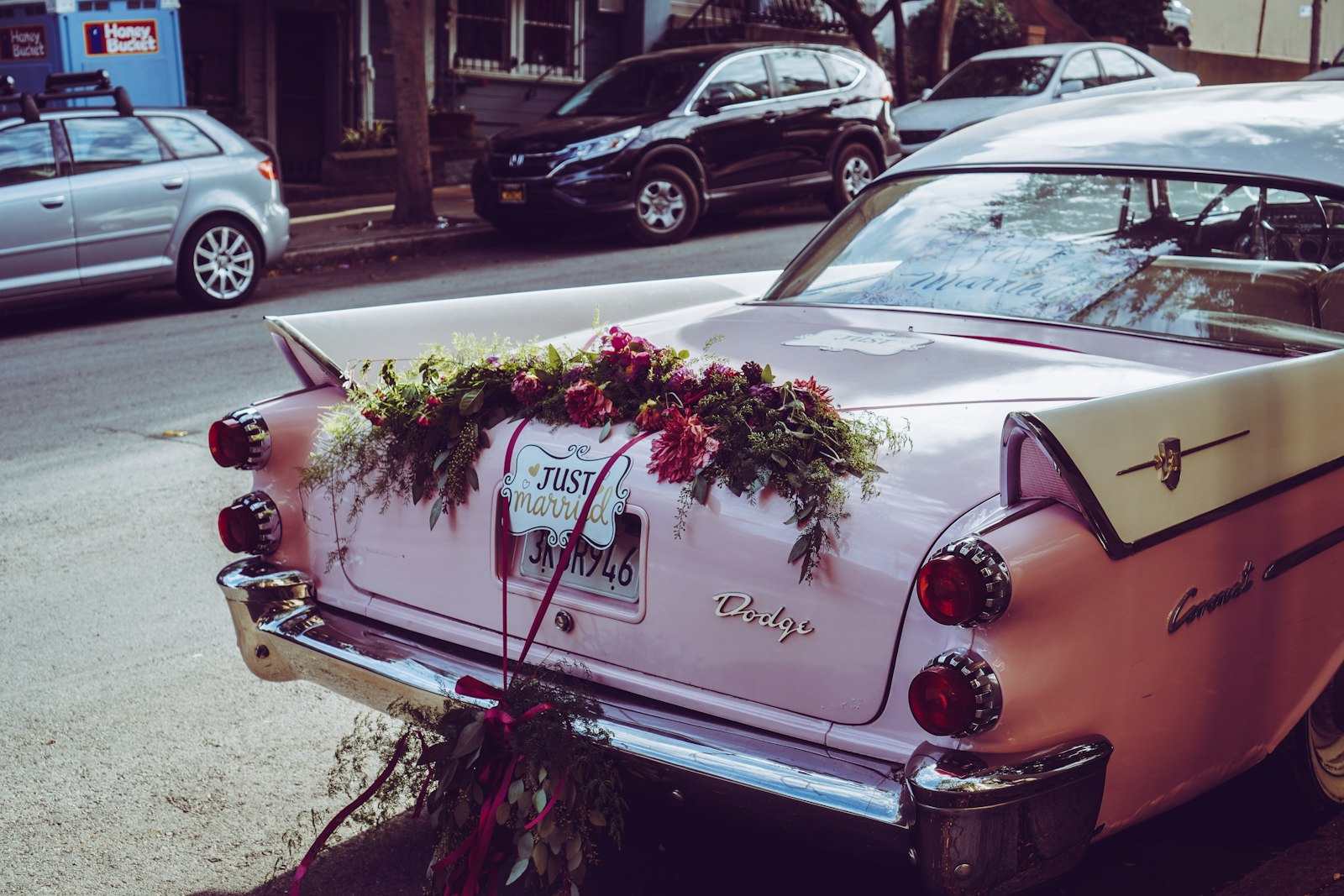
The bride and groom rarely ride in the main vehicle convoy. A chauffeured car (Mercedes E-Class or S-Class, BMW 7 Series, or a vintage vehicle for a more romantic touch) handles the couple-specific movements: arrival at the ceremony, the formal departure photographs, and the transfer to the reception or to the wedding-night hotel.
This is the moment where vehicle aesthetics matter as much as functionality. Confirm the model, colour, and condition with the provider in advance. Some couples opt for a classic Bentley, Jaguar, or Citroën DS rather than a modern executive sedan; the right provider has access to both options.
Special considerations
Three operational details consistently separate well-run wedding transport from rough edges.
Dress codes and luggage
Wedding attire imposes specific vehicle requirements. Long dresses, heels, suit jackets, and elaborate hairstyles do not pair well with low-ceiling minibuses, sticky upholstery, or vehicles without proper climate control. Specify the dress code at the briefing stage and let the provider match the vehicle accordingly.
Guests rarely bring luggage to the ceremony itself, but they may move between hotels during a multi-day wedding weekend. Plan the luggage logistics separately from the guest transport, using a dedicated cargo vehicle or scheduled hotel-to-hotel movement.
Alcohol-aware late-night service
Wedding receptions involve alcohol. Drivers handling the late-night returns need to be alcohol-aware in their conduct: patient with passengers, calm with the inevitable joker, ready to assist a guest who is struggling. The provider’s standard driver training should cover this scenario; if it does not, ask for it.
This is also where bringing the right vehicle matters. A small executive minivan handling a 90-minute return to a remote hotel with three tired guests is materially different from a packed coach with 40 chatty guests. Match the vehicle to the moment.
Multilingual driver for international guests
Destination weddings in Europe routinely bring guests from 10 or more countries. Confirm with the provider that drivers on the wedding day speak English to a working professional level (B2 minimum), and that drivers on the airport pickups for specific guest groups can communicate in the relevant language where possible. A French driver picking up a Korean family at Paris CDG with zero shared language creates a friction the bride does not want to learn about. When you’re planning a multilingual destination wedding, BusCom can match drivers to guest language profiles across our active European markets — reach us at contact@buscom.info.
Budget planning for wedding transport
A reasonable European wedding transport budget for an 80-guest event with a single venue change typically lands between €2,500 and €5,500 for the wedding day itself, including coach, minibuses for hotel shuttles, chauffeured car for the couple, and the late-night returns. The range depends heavily on country (Italy and France often higher than Spain or Portugal), distance between venues, and the duration of late-night standby.
Add 10 to 15% for any guests arriving over multiple days who need airport transfers. Add another 5 to 10% for vintage or luxury vehicles for the couple. Budget separately for any pre-wedding events (rehearsal dinner, welcome cocktails) and post-wedding events (farewell brunch). Wedding planners who give the couple a single all-in transport budget at the briefing stage avoid surprise conversations weeks before the wedding.
How BusCom supports wedding planners across Europe
BusCom works with wedding planners and direct couples on destination weddings across our active European markets in France, Germany, the Netherlands, Belgium, Sweden, Norway, Italy, Spain, Portugal, and the wider EU. With operating bases in Paris, Munich, Amsterdam, and Stockholm, plus local driver networks across the continent, BusCom can deploy the right fleet mix for a destination wedding in Provence, a vineyard ceremony in Tuscany, or a city wedding in Stockholm.
With 20,000+ customers served, a 4.6 out of 5 Trustpilot rating, same-day quotes, multilingual support, GDPR-compliant data handling for guest manifests, and operational protocols designed around hospitality rather than corporate logistics, BusCom approaches wedding transportation as an extension of the guest experience.
Wedding guest transportation in Europe rewards a careful eye for detail. Map the three core touchpoints (arrivals, ceremony-to-reception, late returns), choose the right fleet mix rather than forcing one vehicle type, and plan the operational details (dress code, alcohol awareness, multilingual drivers) before the wedding week begins. Couples who treat transport as part of the wedding design, not as a logistics afterthought, consistently deliver weddings their guests describe with surprise and warmth.
Send your wedding brief to contact@buscom.info or call +33 1 84 80 99 65 to plan multilingual, multi-vehicle wedding transport across Europe with a provider that approaches the day as part of the guest experience.